
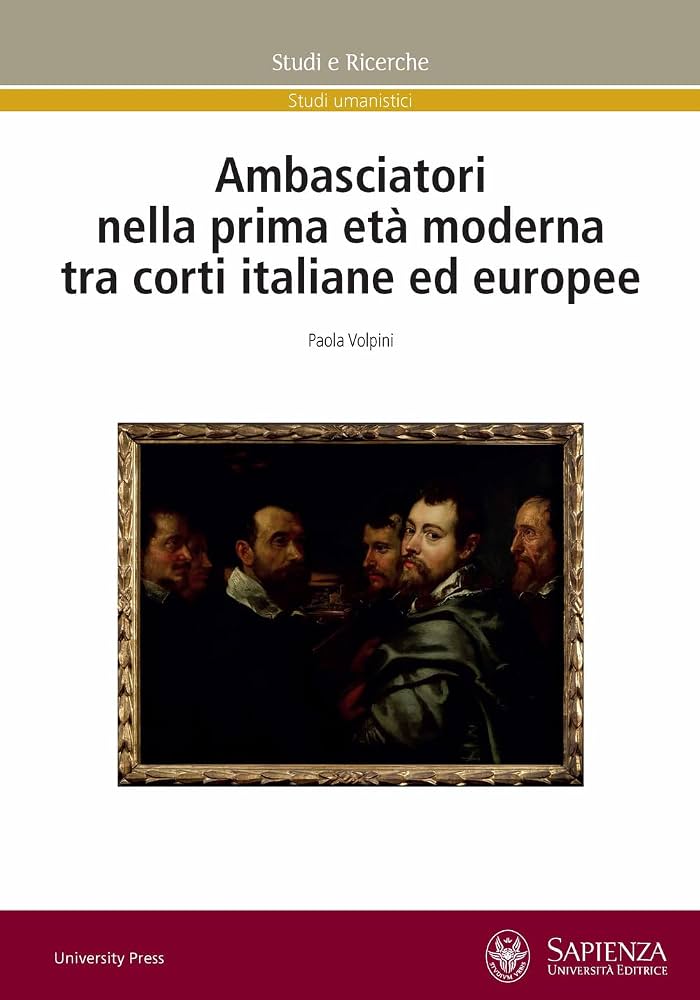
Paola Volpini, Ambasciatori nella prima età moderna tra corti italiane ed europee, Roma: Sapienza University Press, 2022.
With the establishment of permanent embassies between the fifteenth and sixteenth centuries and their consolidation in the seventeenth, the ambassador’s role underwent profound changes. This volume examines its different dimensions through the stages of a mission abroad: the criteria for selecting diplomats, their arrival and long residence at the host court, and the circumstances of their return home. Against the backdrop of a substantial increase in the circulation of information, it also considers procedures for preserving correspondence and guaranteeing its secrecy. Particular attention is paid to networks of relationships, which were especially important before diplomacy became a profession, and their close links with self-presentation and diplomatic sociability. The book also explores the cultural and social implications of both an ambassador’s residence abroad and return home. Throughout, it considers the significance of the rapid, sometimes frenetic turnover of people entrusted with aspects of diplomatic mediation: envoys, agents, secretaries, men of letters and sometimes women. Close to the ambassador and often working in roles that were little understood or opaque, they acted as informants, gatherers of news and channels of cultural exchange.
Through an innovative examination of the relationships between diplomatic treatises, political practices and practical sources concerning ambassadors, this volume critically reassesses fundamental themes in the history of sixteenth- and seventeenth-century European diplomacy.